

How Mindfulness Actually Unlocks Innovation When Everything Else Fails
Creativity and innovation are uniquely human traits. But our increasingly fast-paced lives are hindering our innate ability to think outside the box.
I know this firsthand. With pressures mounting to grow my coaching business, hit specific targets, and stay visible online, my brain often sinks into autopilot. Operational tasks take over. Strategic thinking disappears.
And here's the trap: trying to force creativity when you're stuck in this mode is futile. Frustration sets in. You try harder. The creative well runs dryer. It becomes a vicious cycle.
I want to show you how to break this cycle by exploring the real link between mindfulness and innovation, but not as another productivity hack, but as a way back to yourself.
Lauren Cartigny
My Slow Journey to Actually Understanding Mindfulness
I have been working on quieting my mind for five years now. The use of meditation apps like Headspace was initially an "on and off" thing for me. I struggled to form a daily practice. Meditation was always more of a "should do" than something I genuinely wanted.
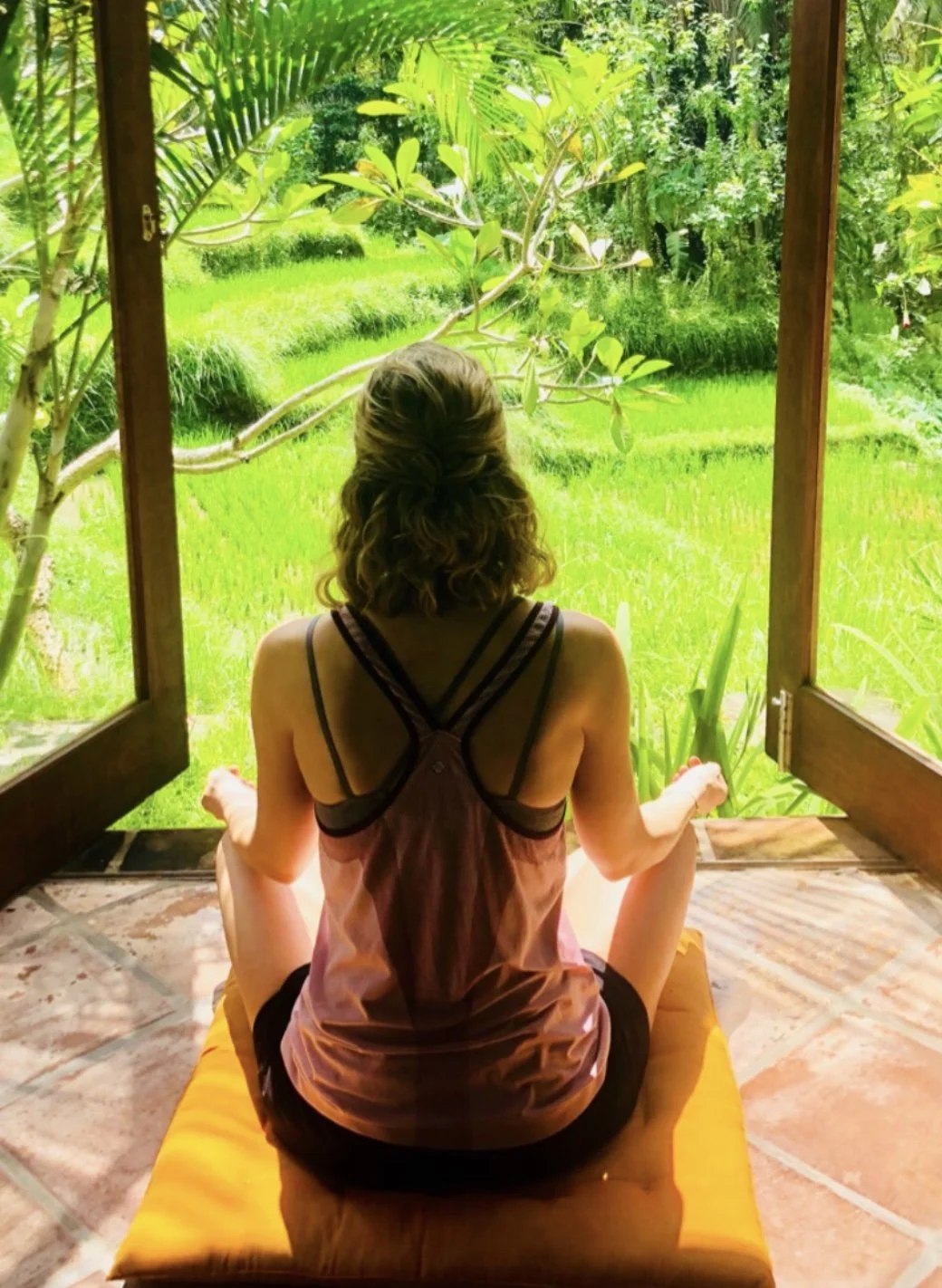
But after several intense yoga retreats, including one in Bali last Christmas that really got to me and I got a hint preview of what it truly means to quiet my mind. Not by forcing thoughts away, but by simply observing them and not getting lost in them.
This isn't about becoming a zen master. It's about creating enough mental space for something new to emerge
.
What Mindfulness Actually Means
Headspace defines mindfulness as "the quality of being present and fully engaged with whatever we're doing at the moment, free from distraction or judgment, and aware of thoughts and feelings without getting caught up in them."
Simple definition. Incredibly difficult to practice when your mind is racing with deadlines, targets, and the constant ping of notifications.
Mindfulness has long been used in self-help circles, but it's increasingly being utilized in the workspace. Companies like Google and Nike are making it an integral part of employee development, not because it's trendy, but because it works.
Research shows that people who practice mindfulness have more cognitive flexibility and are better at solving problems requiring insight. They can see around corners. They make unexpected connections. They innovate.
But here's what the research doesn't always capture: you can't access that creative flexibility when your nervous system is stuck in overdrive.
Why We Lose Access to Creativity
When we are stressed, overwhelmed, or stuck in survival mode, our brains literally narrow their focus. This is a feature, not a bug, it helped our ancestors survive immediate threats.
But it's terrible for innovation.
Innovation requires expansive thinking. It needs space. Curiosity. The ability to play with ideas without immediately judging them as "good" or "bad."
When you're in your head, spinning through your to-do list, worrying about what you should be doing instead of what you're actually doing, that space collapses.
This is why you can't force creativity. You can't think your way into innovation. You have to create the conditions for it to emerge.
Two Practices That Actually Work
1.Find a Quiet Place in Nature to Reconnect
Go on a walk. Our environment impacts us greatly. If you need to be in a creative space to innovate, change your scenery and move away from your desk.
If you can, walk outside and engage with nature. Not only will you be away from distractions, being among nature can help relieve stress and quiet the mental chatter.
If getting outside isn't possible, find a place where it feels good to quiet your thoughts and just be, free from any expectation of results.
This sounds counterintuitive when you have deadlines looming. But by seemingly doing nothing, you create space for ideas to begin flowing back.
I've started building this into my daily routine. Regular long walks in nature have become my secret weapon for creative thinking. Not because I'm trying to solve problems while I walk, but because I'm giving my mind permission to wander.
That's where innovation lives: in the wandering.
2.Step Completely Away From Your Day-to-Day Environment
Go on a retreat. I first accessed my inner calm on a retreat in Bali over Christmas last year. I will always remember the moment I felt what connecting to my soul actually meant.
Once I initially felt this state, it became easier to access inner calm again. But for me, it took guidance and being far away from my day-to-day environment to break through.
Retreats are powerful because of the immersion. Inner calm is always within us – it's simply covered up by day-to-day preoccupations. We forget how to access it and get stuck in a rut.
I returned to Bali this month to get my creative juices flowing again. It reminded me that sometimes we need to completely remove ourselves from our normal context to remember who we are beneath all the doing.
Where True Creativity Is Born
As you quiet your mind, you begin to hear your heart speak. That's where true creativity is born.
Not in forcing. Not in grinding. Not in trying harder.
In the space between thoughts. In the moment when you stop performing and start being present.
Innovation isn't about having more ideas. It's about creating the conditions where the right ideas can find you.
Your Self-Insights for This Week
As you move through the coming days, notice:
When do you feel most creative? What conditions are present?
How often do you actually step away from your desk without a device?
What would change if you gave yourself permission to "do nothing" for 20 minutes today?
Can you take one walk this week with no agenda, no podcast, no purpose except to be present?
Start there. Your creativity is waiting for you to get quiet enough to hear it.
If you believe change is possible, and have decided to make an investment in making a change in your life, follow me on Youtube, LinkedIn and visit The Self-Science Lab for more info.
Join my Reset and Rise weekly workshops or book a discovery call to see if 1:1 coaching might support your transition.
Lauren Cartigny, an ICF certified professional coach
Lauren specializes in individual, leadership, team, and organizational coaching, and is the founder of The Self-Science Lab Ltd, a community of conscious professionals on a self-discovery journey to transform the quality of their work and home lives.